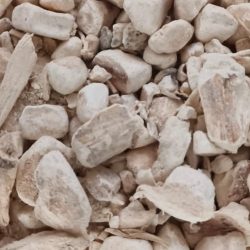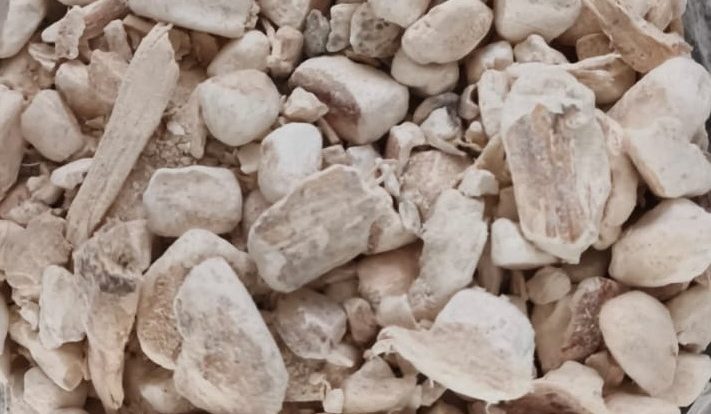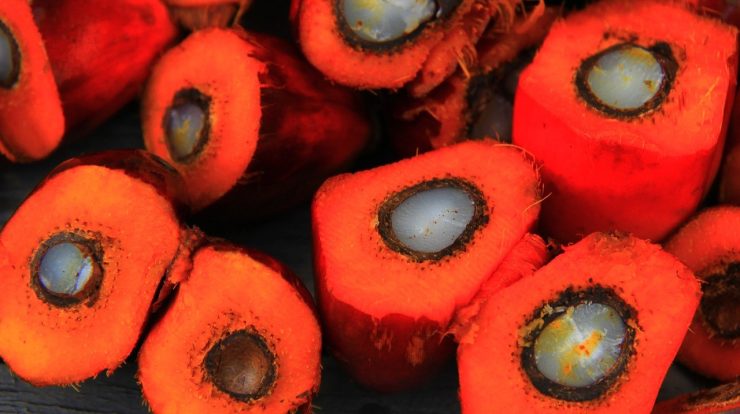




Palm kernel by-product (PKBP) is widely used as a feed ingredient for livestock, including poultry, pigs, and ruminants. Based on its nutritional content, palm kernel waste can be classified as an alternative energy source and has a high fibre content, making it very economical in feed formulations. PKBP, a by-product of palm oil production, still poses various challenges, including its anti-nutritional content. Physically, it contains shell contamination, which is very difficult for poultry to digest. These challenges can be overcome by making fermented PKM, although this method is still rarely used.
The palm oil industry produces two by-products commonly used as animal feed ingredients: Palm Kernel Meal (PKM) and Palm Kernel Cake (PKC), which are sometimes confused with one another. In this article, PKM is also referred to as PKC unless specifically defined. Technically, both are by-products (waste) from the second stage of palm oil processing, but the production methods differ.
Palm kernel oil (PKC) is a residual product after oil extraction from palm kernels, processed by mechanical pressure and is in solid form. PKC is also commonly called PKE (palm kernel expeller) because it is processed using an expeller machine. PKM is the residual product from palm kernel extraction using chemical solvents. These differences in production methods result in differences in nutritional content between the two.
PKC’s oil content is higher than PKM’s because mechanical oil extraction is less efficient than solvent extraction, leading in a higher fat content. PKC’s oil content is 3-9% (and can reach 12%), while PKM contains only 1-3% (<5%) fat. This has significant implications for metabolic energy production: the AME of PKM is 1800-2000 kcal/kg, while PKC can be higher (2200-2500 kcal/kg). PKM’s protein content ranges from 17-19%, which is relatively similar to, or slightly higher than, PKC.
The crude fibre content of both palm kernel shells and palm kernel varies widely, ranging from 16-20%. Crude fibre content is strongly influenced by shell contamination, with a strong positive correlation between the two (r = 0.9998). Shells contribute 60-70% of the crude fibre. Shells also contain relatively high levels of ash, ranging from 2-5%, so increasing shell contamination will increase the ash content.
The correlation between crude fibre and ash content is generally strong (r = 0.7-0.9). This is primarily due to shell contamination affecting both palm kernel shells. Both processes producing palm kernel shells have limitations in nut cracking and shell separation, resulting in difficult-to-control variations in shell percentage and, in turn, in crude fibre and ash content in both palm kernel shells and palm kernel shells.
The color of palm kernel shells from palm kernel shells and palm kernel shells ranges from brown and can vary from light brown to dark brown, even to blackish brown. Generally, palm kernel shells are darker and have an uneven color distribution compared to palm kernel shells. This is partly due to the expeller pressing process in PKC, which relies on mechanical friction and high pressure.
Excessive heat triggers the Maillard reaction, causing the color to darken and tend to burn in certain areas. Residual oil in the material, if oxidized during cooling and storage, further intensifies the dark color. Conversely, PKM colors are lighter and more uniform due to the material’s finer shape and size. During solvent extraction, temperature can be better controlled, and a lower maximum temperature results in a lighter color.
Contents
- 1 Constraints to Palm Kernel Meal Use
- 2 Table 1. Proximate analysis of PKM, SBM, CSM and RSM (dry matter basis)
- 3 Table 2. Amino acid composition of PKM, SBM, CSM and RSM (dry matter basis)
- 4 Table 3. Amino acid availability in PKM, SBM, CSM and RSM fed to chicks
- 5 Improving Palm Kernel Meal Quality
- 6 Palm kernel meal fermentation process
- 7 Palm Kernel Meal Fermentation Techniques
- 8 Palm Kernel Meal Fermentation Experiment in Broiler Feed
- 9 Table 4. Details of experimental treatments
- 10 Table 5. The effects of diet on body weight gain, feed intake and feed conversion ratio
- 11 References
Constraints to Palm Kernel Meal Use
Indonesia is the world’s largest palm oil producer. Global palm kernel meal (PKM) production is estimated at 8.7–9.1 million tons, with 70% of the supply coming from Indonesia. Indonesian palm kernel meal (PKM) production in 2024/2025 is projected to reach 6.845 million tons (USDA, Oilseeds and Products Annual Report – Jakarta, 2025). Palm kernel meal production is projected to grow by 5–7% annually until 2029. Demand for this by-product as an alternative raw material for livestock and aquaculture feed will continue to increase in line with the rising cost of conventional protein sources rising.
The use of PKM as an animal feed ingredient has increased recently, particularly due to high demand from poultry feed mills. PKM is commonly used in ruminant feed because the rumen is a biological fermenter capable of digesting its high crude fiber content, making it a functional nutritional source for ruminants. β-mannan and galactomannan are not anti-nutritional. PKM is increasingly included in aquaculture feed formulations as an energy source and filler, although its use remains limited. Most PKM production is used for domestic consumption, with the remainder exported as animal feed.
However, the percentage of PKM used in feed formulations remains limited and cannot be maximized. The low absorption rate of PKM for the animal feed industry is caused by four main problems: (1) high crude fiber content and insoluble NSP, particularly β-mannan, cellulose, and lignin, which reduce nutrient digestibility and metabolic energy; (2) low protein content with unbalanced amino acid content, particularly low amino acid values for lysine, methionine, tryptophan, and cystine; (3) shell contamination causing quality inconsistencies; (4) poor palatability, especially high shell contamination, leading to decreased feed consumption; (5) PKC, especially with a significant fat content (8-10%), is susceptible to rancidity caused by oxidation due to prolonged storage.
PKM cannot be classified as a protein source, and its energy content is also low due to its high crude fiber content. As much as 56.4% of PKM’s crude fiber is in the form of β-mannan, which is particularly difficult for poultry to digest due to the lack of the enzyme mannanase. PKM crude fiber consists of 60% non-starch polysaccharides (NSP), which can be further broken down into 78% mannan, 3% arabinoxylan, 12% cellulose, and 3% glucuronoxylan. High crude fiber content reduces energy availability and also protects protein molecules, making them difficult for proteolytic enzymes to break down.
Table 1. Proximate analysis of PKM, SBM, CSM and RSM (dry matter basis)
| Ingredient | Dry matter (%) | Protein (%) | Fibre (%) | Ash (%) | Ether extract (%) |
|---|---|---|---|---|---|
| PKM (Palm kernel meal) | 92.0 | 21.3 | 17.5 | 5.0 | 7.8 |
| SBM (Soybean meal) | 91.1 | 48.0 | 6.5 | 6.0 | 0.6 |
| CSM (Cottonseed meal) | 92.4 | 41.0 | 13.6 | 7.0 | 2.0 |
| RSM (Rapeseed meal) | 90.5 | 38.0 | 12.0 | 7.2 | 1.5 |
| Source : E.N. Nwokolo, D.B. Bragg and W .D. Kitts, 1976 | |||||
Table 2. Amino acid composition of PKM, SBM, CSM and RSM (dry matter basis)
| Amino acid | PKM | SBM | CSM | RSM |
|---|---|---|---|---|
| Lysine | 0.69 | 2.95 | 2.19 | 2.08 |
| Histidine | 0.41 | 1.23 | 1.37 | 0.98 |
| Arginine | 2.68 | 3.45 | 5.60 | 1.93 |
| Aspartic acid | 1.69 | 5.64 | 4.74 | 2.38 |
| Threonine | 0.66 | 1.88 | 1.51 | 1.48 |
| Serine | 0.90 | 2.48 | 2.15 | 1.48 |
| Glutamic acid | 3.62 | 9.01 | 10.32 | 6.22 |
| Proline | 0.50 | 1.21 | 1.58 | 2.16 |
| Glycine | 0.91 | 2.16 | 2.31 | 1.79 |
| Alanine | 0.81 | 2.16 | 2.04 | 1.58 |
| Valine | 0.43 | 1.02 | 1.68 | 0.75 |
| Methionine | 0.47 | 0.75 | 0.70 | 0.84 |
| Isoleucine | 0.60 | 1.92 | 1.22 | 1.30 |
| Leucine | 1.23 | 3.71 | 2.85 | 2.57 |
| Tyrosine | 0.58 | 1.84 | 1.45 | 1.09 |
| Phenylalanine | 0.82 | 2.44 | 2.48 | 1.49 |
| Source : E.N. Nwokolo, E.N, D.B. Bragg and W.D. Kitts, 1976 | ||||
Table 3. Amino acid availability in PKM, SBM, CSM and RSM fed to chicks
| Amino acid | PKM | SBM | CSM | RSM |
|---|---|---|---|---|
| Lysine | 90.0 | 99.0 | 89.0 | 94.4 |
| Histidine | 90.1 | 98.8 | 93.8 | 94.2 |
| Arginine | 93.2 | 98.8 | 95.7 | 95.8 |
| Aspartic acid | 87.6 | 98.3 | 93.6 | 91.7 |
| Threonine | 86.5 | 97.9 | 89.8 | 90.8 |
| Serine | 88.7 | 98.1 | 93.0 | 91.4 |
| Glutamic acid | 90.1 | 98.9 | 96.3 | 94.9 |
| Proline | 68.0 | 93.0 | 90.9 | 91.2 |
| Glycine | 63.3 | 92.9 | 91.7 | 89.4 |
| Alanine | 85.5 | 97.4 | 89.2 | 94.2 |
| Valine | 68.4 | 92.9 | 91.1 | 90.9 |
| Methionine | 91.4 | 98.7 | 93.3 | 78.4 |
| Isoleucine | 86.1 | 97.7 | 91.3 | 91.6 |
| Leucine | 88.5 | 98.4 | 92.4 | 94.0 |
| Tyrosine | 85.0 | 98.0 | 94.2 | 92.8 |
| Phenylalanine | 90.5 | 98.6 | 95.2 | 94.8 |
| Source : E.N. Nwokolo, D.B. Bragg and WW.D. Kitts, 1976 | ||||
Physical constraints arise from the varying shell content found within the palm kernel by-product. The shell is the hard outer layer of the palm kernel (endocarp), dark brown to shiny black, with a high density and indigestibility in poultry. Shell contamination levels within palm kernel oil (PKM) vary widely, ranging from <0.2% to >5%. This is primarily due to inefficiencies in the de-shelling process at two stages of the production chain.
First, in the palm oil mill, where, after the kernels are separated from the pulp through pressing, the intact kernels (shells + kernels) are crushed, and a hydrocyclone separates the shells (lighter, floating) from the kernels (heavier, sinking). This inefficiency allows the shells to escape with the kernels. Second, in the palm kernel oil extraction plant, kernels contaminated with shells are crushed, cooked, and mechanically extracted (expeller) or with solvents.
Without adequate pre-cleaning or post-screening, shell fragments will remain in the final product as PKM or PKC. The extent of palm kernel shell contamination is also a determining factor in the quality of palm kernel meal (PKM) during the feed mill process and can limit its maximum use in feed. Palm kernel shells have no nutritional value whatsoever, so their presence negatively correlates with the required nutrient content.
Improving Palm Kernel Meal Quality
Efforts to improve palm kernel meal quality can be undertaken using various approaches, including physical (mechanical) methods such as sieving/filtering, grinding, and extrusion, enzymatic methods, and non-physical methods such as fermentation. Palm kernel shells are known to be very difficult to degrade biologically and chemically, so mechanical treatment is an option. Mechanical improvement aims to minimize palm kernel shell contamination, thereby increasing their nutritional value per unit weight, and to adjust particle size to make them more uniform, more suitable for feed production, and more easily digested.
Palm kernel meal separation using a separator machine separates the shells from the more valuable PKM fraction. Using the fractionation (filtering) method, it was shown that the non-shell components (PKM) were concentrated on sieves with mesh sizes 30 (0.595 mm) – 400 (0.053 mm), while the shell components were concentrated on sieves with mesh sizes 8 (2.38 mm) – 16 (1.19 mm) (Yatno, 2011 in Ainun Nafisah et al., 2022).
The grinding process aims to reduce the particle size of PKM, including its shell components. Reducing particle size increases surface area, allowing greater access for digestive enzymes and improving digestibility. A 1-2 mm sieve is recommended for optimal grinding. Considering that shells are inherently difficult to digest, the grinding process will not significantly impact shell quality. The only improvement is the quality of the feed produced by grinding, which will have a positive effect. The sieving/filtering process is more significant because it reduces the percentage of shell content in PKM.
Extruding palm kernel cake (PKM) using an extruder, such as a twin-screw extruder, can help reduce undigested polysaccharides. A study measuring the effect of extrusion and sieving on the nutritional quality of palm kernel cake (PKC) concluded that neither mechanical treatment, extrusion nor sieving, significantly affected protein and ash content. However, both physical treatments significantly reduced crude fiber content by 21% and 19%, respectively. Furthermore, the extrusion process increased AME energy supply by 6% and increased protein digestibility by 32%. Extrusion at high temperatures for a short time degrades microorganisms and heat-sensitive anti-nutritional compounds. Pressure and friction during the extrusion process break down the protein structure, improving digestibility.
The use of enzymes to improve the nutritional quality of palm kernel cake (PKM) has not yielded significant results. The physical shell particles cannot be destroyed by enzymatic treatment, but it indirectly minimizes the negative nutritional impact of PKM, as shell contamination is highly correlated with poor PKM quality. In many studies, supplementing commercial enzymes to PKM did not significantly improve chicken growth rates compared to chickens that did not receive enzyme supplementation. This is likely because commercial enzymes are not compatible with PKM’s nutritional profile, particularly the crude fiber fraction, as most were not originally designed for PKM (Sundu et al., 2004).
At least three types of enzymes are needed to improve the quality of palm kernel meal (PKM): mannanase, galactosidase, and cellulase, each of which breaks down and digests the mannan, cellulose, and galactoside chains. Several follow-up studies using the mannanase enzyme alone or in combination with mannanase, cellulase, and galactosidase have yielded more promising results. Saenphoom et al. (2013) added cellulase and mannanase enzymes to broiler grower (5% PKE) and finisher (20% and 30% PKE) feeds. They demonstrated a 38% increase in TME (true ME) compared to untreated PKE. They confirmed that palm kernel meal can be safely used at concentrations up to 20% without adverse effects.
Palm kernel meal fermentation process
Fermentation is a common practice for several raw materials commonly fed to ruminant livestock. For example, in silage production, it can be processed into grass silage, straw silage, corn silage, legume silage, and even fermented fish meal. The purpose of fermentation is to improve the nutritional quality and nutrient availability of low-quality feed ingredients, particularly those derived from agricultural or food processing waste.
Fermentation increases microbial protein and essential amino acids, particularly lysine and methionine, while reducing anti-nutrients such as β-mannan and tannin. This is expected to increase the use of local raw materials as alternatives in poultry feed formulations. Potential alternative raw materials for this purpose include palm kernel by-products, palm kernel meal, coconut meal, copra, cassava waste, bran, cocoa pod husks, shrimp waste, chicken feather waste, sago pulp, soy sauce dregs, and others. Specifically for PKM/PKC, fermentation softens shell particles but does not eliminate them by partially degrading the shell’s lignocellulose, making it more palatable to production machinery and the chicken’s digestive system.
The palm kernel meal fermentation process requires the assistance of microorganisms such as yeast, bacteria, and/or fungi to break down complex organic compounds into simpler ones. In this process, carbohydrates, proteins, fats, and other organic materials are broken down under aerobic or anaerobic conditions through the enzymatic activity of these microbes. Therefore, fermentation technology is highly suitable for application to alternative local raw materials that face challenges such as high crude fiber content, low protein content, amino acid imbalances, and the presence of anti-nutritional substances.
A study by Bahri et al. (2019), cited in Sundu et al. (2021), on the fermentation of coconut waste using Aspergillus niger indicated that this microorganism can produce the enzyme mannanase. It is also known that some microorganisms can synthesize certain vitamins and amino acids during fermentation. The effect of bacterial species on mannanase enzyme activity can vary. Sclerotium rolfsii showed the highest mannanase activity at 67.51 U/ml, and Eupenicillium javanicum at 24.58 U/ml. Aspergillus niger had the lowest of the two. The cellulase enzyme activity produced by S. rolfsii is also high (21.89U/ml) (Mirnawati et al., 2018).
Palm Kernel Meal Fermentation Techniques
In addition to selecting the appropriate microbial species for the substrate, other factors that must be considered for a successful fermentation process include the substrate used (including particle size, moisture content, and water activity), pretreatment of the substrate, and appropriate and uniform environmental conditions. Several factors that can influence the success of palm kernel meal fermentation include temperature, pH, humidity, the chemical composition of the media, the length of the fermentation process, and others. These factors will affect the growth quality and activity of the microorganisms used in the fermentation process.
A common palm kernel meal fermentation technique uses solid-state fermentation (SSF), also known as solid media fermentation. This method is useful for reducing lignocellulose content, increasing protein and vitamin levels, producing single-cell protein (SCP), and producing enzymes. Given the wide variety of microbial species used in fermentation processes, solid-media fermentation methods can be categorized into two groups: (1) natural solid-media fermentation, which utilizes natural microflora, for example in compost and silage production; and (2) pure-culture solid-media fermentation, which utilizes a single or mixed pure-culture microflora, for example, on an industrial or research scale.
In a study using the SSF method by B. Sundu et al. (2021), PKM was used as the solid substrate. The PKM was sieved to remove as much shell as possible from the substrate material. The sieved PKM, with minimal shell content, was finely ground to produce particles ranging from 1 to 2 mm. This is based on the consideration that the smaller the particle size, the larger the surface area available for microbial fermentation, thus accelerating/perfecting the fermentation process.
The PKM substrate was autoclaved for 20 minutes at 20 psi, then cooled. The purpose of autoclaving is to heat and sterilize it using high-temperature, high-pressure steam. A total of 20 kg of the substrate was incubated with the specified fungal microbes, thoroughly mixed, and water was added to increase the humidity to the appropriate level. The substrate was left to ferment for 6 days. After the fermentation process was complete, the substrate was dried at 50°C for 48 hours.
The above method is a research-scale fermentation technique; therefore, industrial-scale fermentation, which requires large quantities of substrate, will require different work procedures. On an industrial scale, the SSF process consists of several work stages that can be simply grouped into three processes: upstream, midstream, and downstream (Mitchell et al., 2000; Ashok et al., 2017, in Levi Yafetto, 2022). The upstream process includes preparing the substrate and the growth media for the microorganisms, as well as isolating the microorganisms to be used in the fermentation process. The midstream process involves inoculation and fermentation. The downstream process involves harvesting the final product and packaging it.
Palm Kernel Meal Fermentation Experiment in Broiler Feed
This experiment, which examined the effect of palm kernel meal fermentation with several types of microorganisms and varying levels of use in broiler feed, confirmed that palm kernel meal fermentation can be superior to palm kernel meal without fermentation. The microorganisms tested were Pleorotus ostreatus, Trichoderma viride, and Aspergillus niger. Each was tested at 10% and 20% levels, compared with a control feed without palm kernel meal and a feed containing 10% palm kernel meal without fermentation. Cobb broilers were fed the experimental feed as a starter feed from 1 to 21 days old and as a grower feed from 22 to 42 days old. Performance measured at 42 days old included weight gain, feed consumption, and FCR.
Table 4. Details of experimental treatments
| Diets | Details | Diets | Details |
|---|---|---|---|
| T-1 | Control | T-6 | 20% Palm Kernel Meal without fermentation |
| T-2 | 10% Palm Kernel Meal without fermentation (PKM10) | T-7 | 20% Aspergilus niger - fermented PKM (PKM20) |
| T-3 | 10% Aspergilus niger - fermented PKM (PKM10) | T-8 | 20% Pleorotus ostreatus - fermented PKM (PKM20) |
| T-4 | 10% Pleorotus ostreatus - fermented PKM (PKM10) | T-9 | 20% Trichoderma viridae - fermented PKM (PKM20) |
| T-5 | 10% Trichoderma viride - fermented PKM (PKM10) | ||
| Source: Sundu, B, A. Adjis, S. Sarjuni, S. Mozin and U. Hatta. 2021 | |||
Table 5. The effects of diet on body weight gain, feed intake and feed conversion ratio
| Diets | Parameters | ||
| Body weight gain | Feed intake | Feed conversion ratio | |
| R-1 | 2099a | 3560a | 1.70 |
| R-2 | 2021ab | 3596a | 1.79 |
| R-3 | 2085a | 3583a | 1.73 |
| R-4 | 2016ab | 3558a | 1.77 |
| R-5 | 2011ab | 3581a | 1.78 |
| R-6 | 1787b | 3365b | 1.89 |
| R-7 | 2092a | 3574a | 1.71 |
| R-8 | 2059ab | 3585a | 1.75 |
| R-9 | 2021ab | 3594a | 1.78 |
| Source: Sundu, B, A. Adjis, S. Sarjuni, S. Mozin and U. Hatta. 2021 | |||
Feeding fermented palm kernel meal resulted in significant differences in weight gain (BWG), feed consumption, and FCR. Chickens fed a 20% unfermented palm kernel meal diet had the lowest BWG, even compared to the control diet without PKM. The BWG-free diet demonstrated the most ideal performance in terms of BWG and FCR. Followed by a diet with BWG fermented using Aspergillus niger, which performed well and was not statistically significantly different. It can be concluded that fermented palm kernel meal helps improve the quality and digestibility of BWG nutrients, and Aspergillus niger is the ideal fermenter for BWG substrates.
The application level of fermented BWG/PKC in broiler feed can be classified into three categories: safe (10-15%), moderate (20-25%), and high (30%). The safe level with a standard formulation is sufficient to achieve optimal body weight, FCR, and carcass quality. Moderate levels require adjustments to the energy and amino acid content of the formulation, and the fermentation process must be unproblematic (e.g., increased protein content, decreased crude fiber, and sufficient mannanase activity) to ensure the quality of the fermented material. High levels can only be achieved by adding very high-quality fermented PKM, with full formulation adjustments to anticipate potential decreases in production performance in broiler chickens.
The safe level for the use of fermented PKM in laying hens is 10–15%, with some studies indicating it can be safely used up to 20% in feed, depending on the fermentation technology and the quality of the fermented material. For high levels, the fiber content of the feed must be maintained at 4–5%, and the energy-amino acid balance in the feed must be maintained. Several egg quality parameters must be considered when using fermented PKM, including albumen and yolk quality during storage, Haugh units, and egg weight. Generally, the concentration of lauric acid and beta-carotene in eggs increases, which will improve the egg’s fatty acid profile.
References
- Ainun Nafisah, Nahrowi, Ari Asfiandi, Muhammad Ridla dan Rita Mutia. 2022. Nutrient content and physical characteristics linkage of palm kernel meal and coconut meal after wet separation using molecular weight approach. Jambura Journal of Animal Science. Volume 5 No 1, November.
- Hanim Shaakirrin Faridah, Yong Men Goh, M.M. Noordin, and Juan Boo Liang. 2020. Extrusion enhances apparent metabolizable energy, ileal protein and amino acid digestibility of palm kernel cake in broilers. Asian-Australas J Anim Sci. 33(12): 1965 – 1974.
- Levi Yafetto. 2022. Application of solid-state fermentation by microbial biotechnology for bioprocessing of agro-industrial wastes from 1970 to 2020: A review and bibliometric analysis.
- Mirnawati dan Gita Ciptaan. 2022. Bungkil inti sawit fermentasi sebagai pakan alternatif unggas. Andalas University Press. Cetakan Pertama. Padang
- Mirnawati,Djulardi A and Ciptaan Gita. 2018. Utilization of fermented palm kernel cake with Sclerotum rolfsii in broiler ration. International Journal of Poultry Science 17 (7) : 342 – 347.
- Mirwandono, E dan Z. Siregar. 2004. Pemanfaatan hidrolisat tepung kepala udang dan limbah kelapa sawit yang difermentasi dengan Aspegilus niger, Rhyzopus oligoporus dan Tricoderma viridae dalam ransum ayam pedaging. Digital Library. Fakultas Pertanian Universitas Sumatera Utara. Medan.
- Nwokolo, E.N, D.B. Bragg and W.D. Krrrs. 1976. The availability of amino acids from palm kernel, soybean, cottonseed and rapeseed meal for the growing chick. Poultry Science 55: 2300 – 2304.
- Nwokolo, E.N, D.B. Bragg and W.D. Krrrs. 1976. A Method for estimating the mineral availability in Feedstuffs. Poultry Science 55: 2217-2221.
- Prasetya, R.D.D, M. Ramadani, Nahrowi and A. Jayanegara. 2021. International Seminar on Agriculture, Biodiversity, Food Security and Health. IOP Conf. Series: Earth and Environmental Science 883 (2021) 012064.
- Saenphoom, P., J.B. Liang, Y.W. Ho, T.C. Loh and M. Rosfarizan. 2013.Effects of enzyme treated palm kernel expeller on metabolizable energy, growth performance, villus height and digesta viscosity in broiler chickens. Asian – Aust. J. Anim. Sci. Vol. 26, No. 4: 537-544.
- Sundu B and J.G. Dingle. 2011. Use of enzymes to improve the nutritional value of palm kernel meal and copra meal. Proc. Quensaland Poult. Sci. Symp. Australia, Vol: 11, (14) 1 – 15.
- Sundu B, Kumar A and Dingle J. 2004. Proc. Seminar Nasional pemanfaatan sumber daya hayati berkelanjutan. Palu Tadulako University Press. Pp: 19 -25.
- Suriya Kumari Ramiah et. al. 2019. Effect of feeding less shell, extruded and enzymatically treated palm kernel cake on expression of growth-related genes in broiler chickens. Italian Journal of Animal Science, Vol. 18, No. 1, 997-1004.
- Wahyu Pamungkas. 2011. Teknologi fermentasi, alternatif Solusi dalam Upaya pemanfaatan bahan pakan lokal. Loka Riset Pemuliaan dan Teknologi Budidaya Perikanan Air Tawar, Subang. Media Akuakultur Volume 6 Nomor 1.
- Yatno. 2011. Fraksinasi dan sifat fisiko – kimia bungkil inti sawit. Agrinak 1(1):11-16.